Mom, author, nurse, teacher . . . reading the world around me

Tag: Middle Grade Fiction

Write What You Know?

For most authors, we’ve heard this advice at some point in our writing journey. But does it work? Does writing stories based on our own life experiences create a compelling narrative that readers won’t want to put down? Sort of!

Writing what you know doesn’t mean jotting down the mundane details of your everyday life. That’s journaling, and really isn’t fit for widespread consumption. Heck, I don’t even want my family to read my journals! It also doesn’t mean writing the story of your life, unless you’re writing a memoir. But for fiction, I’m a firm believer in using specific events in my life as fodder for my stories.

The trick to this is to pick something that’s happened to you, or to someone in your life. Then start asking “what if?” over and over until you’ve got something tantalizing enough to create a fictionalized version of that event. I’ve applied this approach to several manuscripts, but I’m going to break down this process for my upcoming MG novel, Caught on Camera.
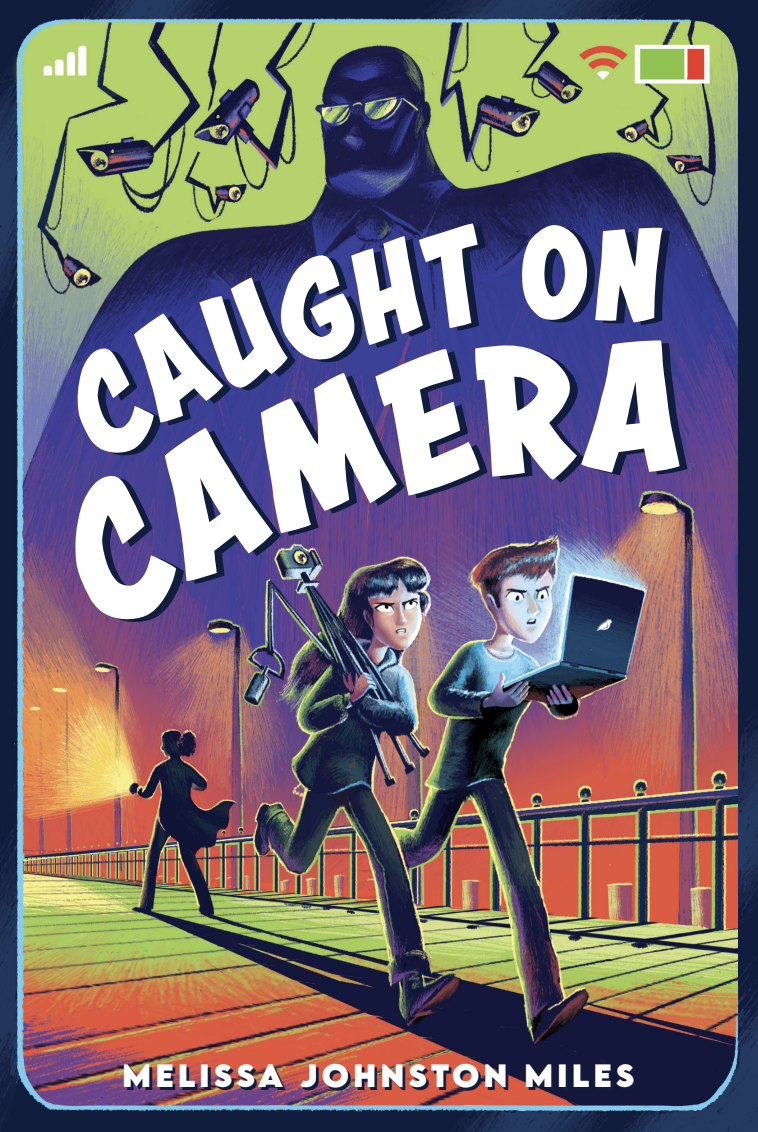
The cover of my debut middle-grade novel, publishing on April 27, 2027

Here is a breakdown of how the idea for my novel began with an everyday event in my life and grew with each “what if” question I applied to it. While teaching fourth grade in Effingham County, Georgia, our school system’s Reading textbook was Harcourt Trophies, an anthology of stories grouped by theme. One of the stories we taught from was an excerpt from the Newbery Honor-winning MG novel, The Cricket in Times Square. I seldom had a student who’d seen New York City or Times Square in person. So the passage below didn’t resonate with them.

One more hop brought him out onto the sidewalk. And there he gasped, holding his breath and crouching against the cement. They were standing at one corner of the Times building, which is at the south end of Times Square. Above the cricket, towers that seemed like mountains of light rose up into the night sky. Even this late the neon signs were still blazing. Reds, blues, greens, and yellows flashed down on him. And the air was full of the roar of traffic and the hum of human beings. It was as if Times Square were a kind of shell, with colors and noises breaking in great waves inside it. Chester’s heart hurt him and he closed his eyes. The sight was too terrible and beautiful for a cricket who up to now had measured high things by the height of his willow tree and sounds by the burble of a running brook.

The “think and respond” questions for this story asked the kids how the setting affects the lives of the characters, and why it’s so hard for this cricket from a quiet meadow in Connecticut to adjust to life in Times Square. My students struggled to make this connection from the text alone. So, I asked my principal if I could pull up some webcam footage of Times Square at the end of class one day to give the kids a sense of the setting. They all enjoyed the webcams and I think it helped them understand the sensory overload aspect of standing in the middle of all lights and sounds. One of my students, was convinced he saw a crime of someone selling “bootleg DVDs” on the sidewalk. He wanted us to call 911 and watch the police arrive–which we obviously didn’t do. But it planted the first “what if?” seed that grew into this novel.

  1. What if a student really did see a crime or something similar while watching webcam footage?
  2. What if no one believed him?
  3. What if he found archived footage to prove he was right?
  4. What if he enhanced that footage to get an image of the suspect/crime/criminal?
  5. What if he started a podcast with tags about conspiracy theories or fake deaths that would garner a lot of views?
  6. What if powerful people were threatened by this information coming to light?
  7. What if those people sent someone after him?
  8. What if the kid had to go on the run from the “bad guys”?
  9. What if the bad guy caught up to him?

Hopefully, you see where I’m going here. Each “what if?” question raises the stakes and creates an opportunity to write exciting scenes for your protagonist.

I started out writing this novel based on “what I know” from an experience I shared with my fourth-grade students. And it grew from there. If you’re interested in CAUGHT ON CAMERA, you can pre-order a copy here.

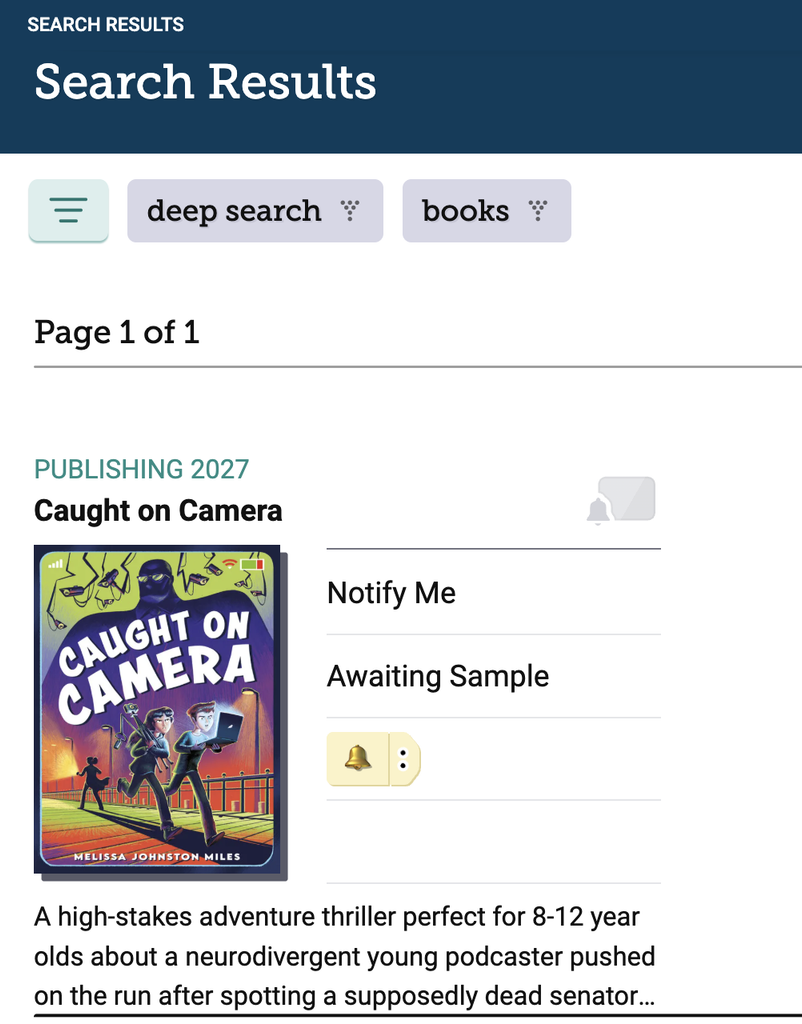
If you want to read the eBook version and you have a Libby App through your library, you can search for the book by title and author and click the “notify me” tag. This lets the purchasing department of your library see interest in the title so they can order it. Then you’ll get a notification that it’s ready to borrow. Here’s a screenshot of what the search and tagging function look like on the app.
What Does it Mean When a Book Dies on Submission?

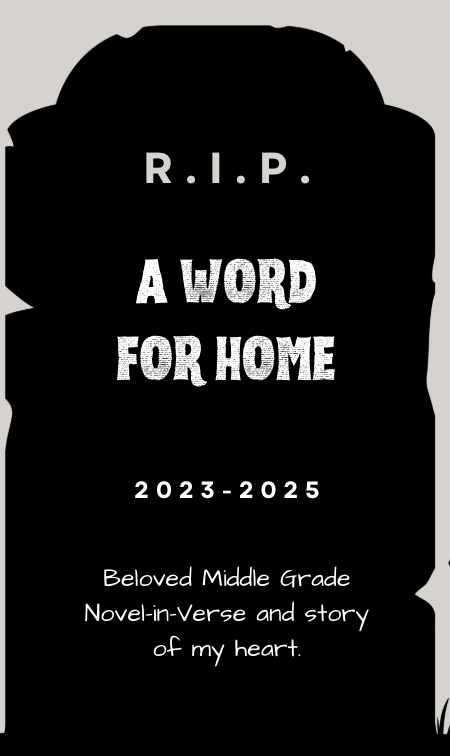
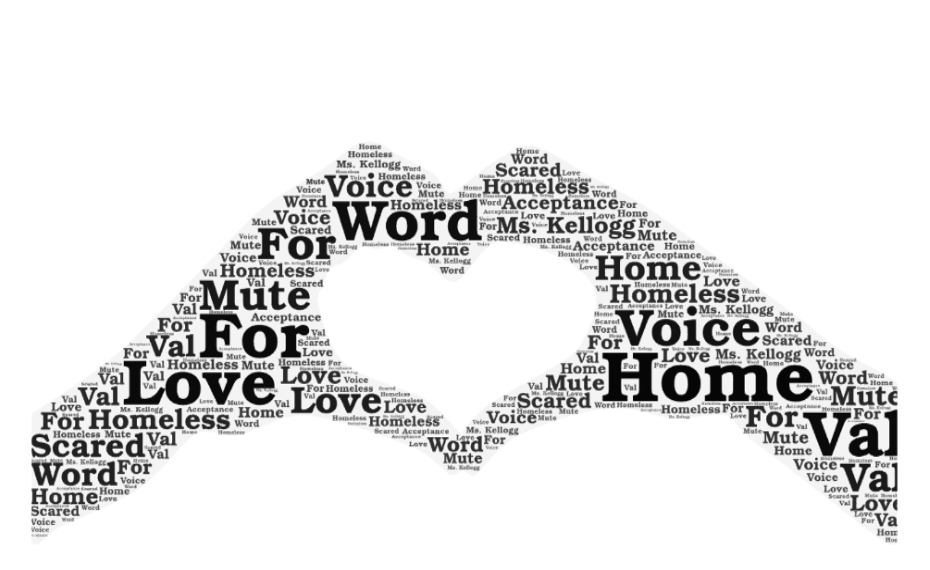
Y’all, this one is a tough one to write. If you’re an author, you understand better than most that some books are truly the story of your heart. For me, A WORD FOR HOME was that story–loosely based my experience of exploring kinship guardianship for of one of my students while teaching fourth grade. It was written in verse, thanks to the encouragement of my amazing critique partner, Reem Faruqi. To this day, I still think it works beautifully as a verse novel.

I finished the draft and incorporated Reem’s feedback. Then, I read it to my mom. I sat in the recliner beside her and read the whole book in one day. When I was done, she said, “That’s my favorite of everything you’ve written so far. Please send it to an agent.” Very shortly after that day, Mom passed away. She’d been at the end of a long battle with Parkinson’s.

When my wonderful agent, Kristen Terrette, offered me representation just weeks later, we were both excited and hopeful that this novel would find a home. We sent it as an exclusive to my absolute “shoot for the stars” editor, who read it quickly and replied that, as much as she liked it, it was too similar to a book she was currently working on. Okay, no worries; we’d send it out to other editors. This was in mid-2023. Over the course of 18 months, the book won over editors–but not the sales and marketing teams who are tasked with betting on the best potential money makers.

Each time an editor loved it, I’d get my hopes up. As much as my brain said, “manage your expectations,” my heart cried out, “this is going to be the one!” While waiting to hear back about the acquisitions meeting, I’d go to the publisher’s website, browse the catalog, admire the book covers and descriptions, and imagine my book listed there alongside the others. Only to be completely bummed when they got a “no” from the sales team.

At this point, I considered the manuscript dead on submission. For those outside the publishing world, this means that your agent has sent a manuscript to the editors deemed a good fit for the project without receiving any offers of publication. And yes, it feels about as crappy as you’d imagine.

However, in June of 2025, Brittany Willis at Moon + Bird, which was the third publisher to pass on A WORD FOR HOME after going to acquisitions with it, emailed us to ask if we had anything more plot-driven, aka commercial. It just so happened, I did! I’d written a manuscript called CAUGHT ON CAMERA. This, too, was based on an experience I had teaching fourth grade. We sent it to Brittany and waited to see if she liked this book as much as my verse novel.

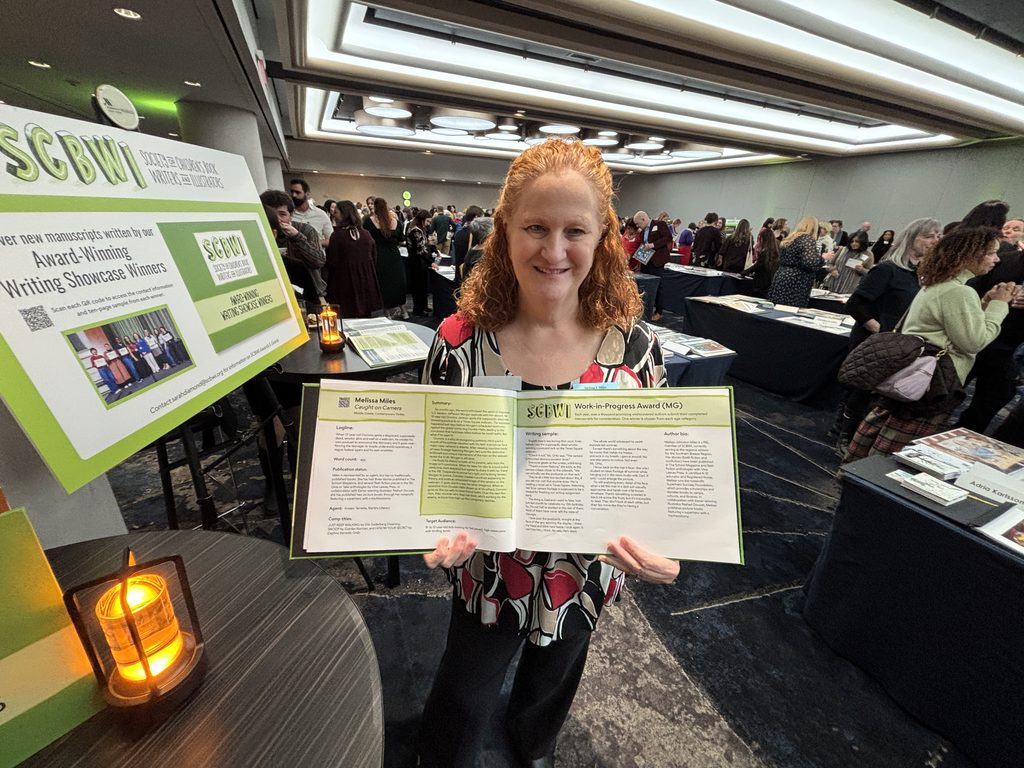
In the meantime, the Society of Children’s Book Writers and Illustrators (SCBWI) picked CAUGHT ON CAMERA as the winner of the Work in Progress Award in the Middle Grade Category. If nothing else, this was a big boost to my confidence and meant that my work would be featured in a showcase at their conference in NYC in early 2026.

Me at the Writing Showcase during the SCBWI Winter Conference in NYC

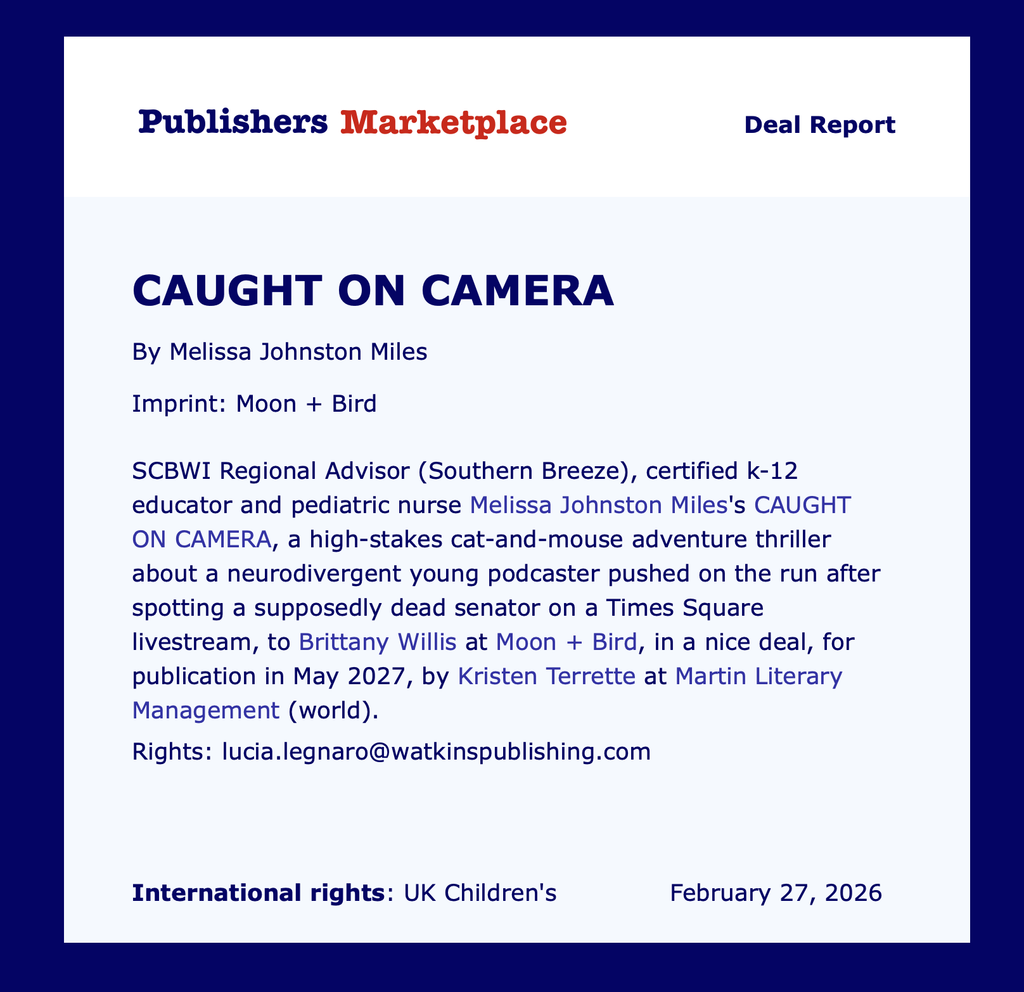
When we heard back from Brittany, she loved it and wanted to take this one to acquisitions. By this time, I felt a bit hardened by disappointment, so I tried not to get excited this time around. The news was much better for the more plot-driven project, and we received a publication offer. CAUGHT ON CAMERA will come out in April of 2027.

The official deal announcement in Publisher’s Marketplace.

So, what have I learned from this experience? Having a book die on submission is tough! It generates tons of doubt in the quality/desirability of your manuscript and kicks imposter syndrome into high gear. But it’s also not the end of the world. I kept writing new stuff while out on submission. I kept honing my craft and attending conferences and webinars. And I never gave up. Luckily, my agent is in this with me for the long haul and never lost confidence in me or my writing. For that, I’m extremely grateful.

<script async src=”https://eomail5.com/form/6c0086b0-6991-11f1-b1d4-774d9e288371.js” data-form=”6c0086b0-6991-11f1-b1d4-774d9e288371″></script>

Middle Grade Mystery

Image

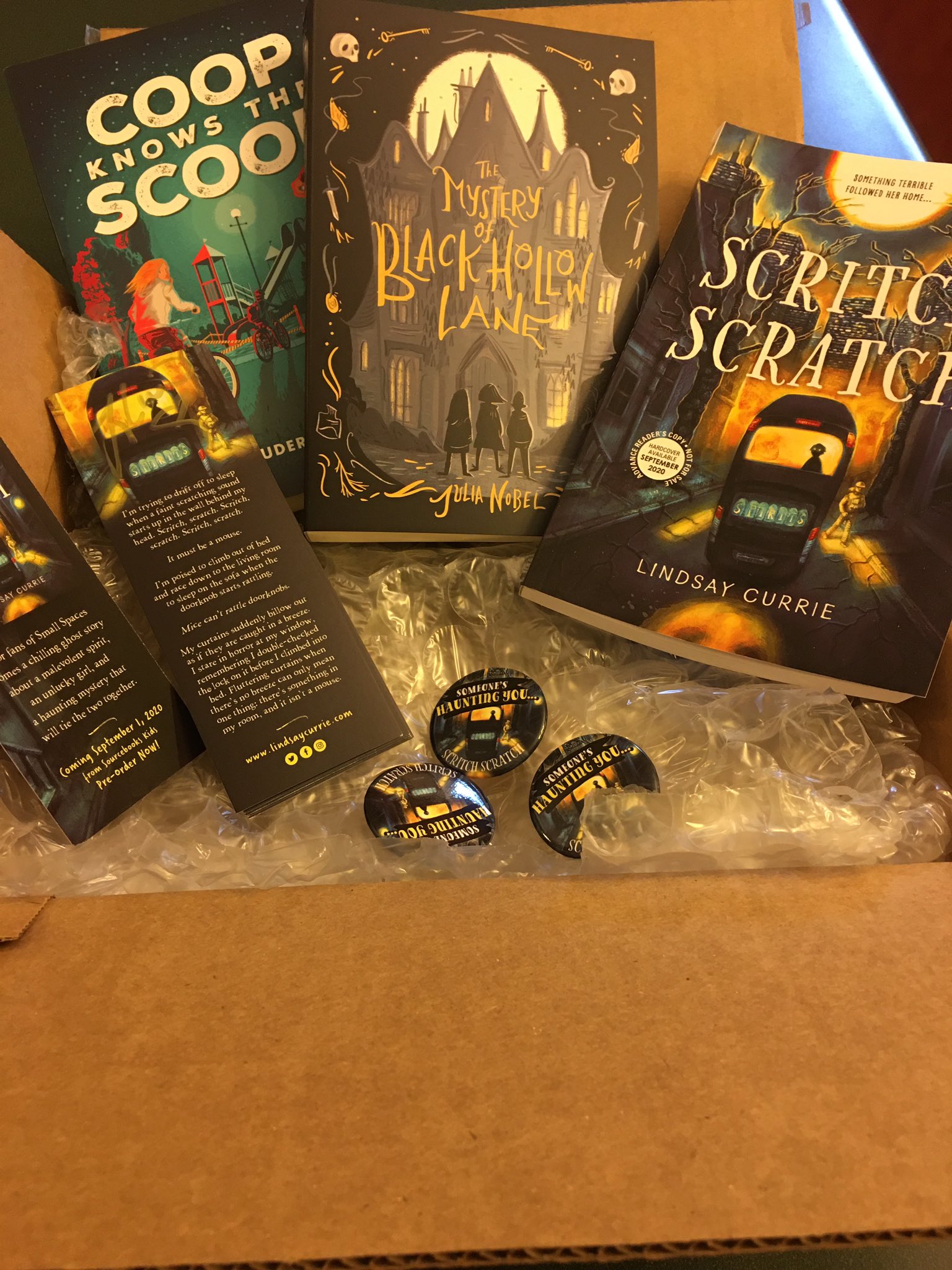
Book Mail from SourceBooks Kids

I recently won 3 mysteries written for kids in a Twitter chat with middle grade mystery writer, Lindsay Currie. Currie’s latest book Scritch, Scratch releases in September from Sourcebooks. In addition to Scritch, Scratch, I also received The Mystery of Black Hollow Lane by Julia Nobel and Coop Knows the Scoop by Taryn Sounders.

I enjoyed each of these titles immensely. They might have even motivated me to attempt a MG mystery novel of my own, but I really should revise all of the drafted manuscripts I have hanging around in my computer files first! If you’re a teacher, librarian or parent and know kids who would enjoy a mystery, I recommend these titles. Each book is quite different from the other two, so I’ll break them down a bit for you.

Scritch, Scratch is a mystery for sure, but it’s also a straight up ghost story! The main character Claire begins the story with familiar enough middle school angst–an annoying sibling, embarrassing parents, the new kid at school usurping her bestie, etc. However, things take a drastic turn when a ghost follows her home from assisting her father with one of his humiliating (to her, anyway) ghost tours. No spoilers, but this ghost is scary! Claire realizes that the only way to stop him from keeping her awake at night and terrified during the day is to figure out what he wants from her–and then do it. Even if she’s not sure she can. At heart, the story is about friendships and families, but has the added bonus of highlighting little known tragedies in Chicago history. I’ve visited Chicago a couple of times, but didn’t know any of these stories.

The Mystery of Black Hollow Lane is set in a boarding school in England, which piqued my interest immediately. I vividly remember reading the Harry Potter and the Sorcerer’s Stone for the first time (as an adult) and discovering the whole world of houses, headmasters, common rooms, dormitories, detentions, and “skiving off” assignments. Those regular mundane parts of British school life were new to me, and I found them almost as magical as the actual magic at Hogwarts. Wellsworth isn’t a magical school, but it has plenty to hold a reader’s interest. The main character Emmy, gets sent to this school after the fall term has already started. For someone who was “the new kid” at school a few times myself, I really felt for her. Emmy makes a couple of loyal friends who help her unravel cryptic clues about her father–who disappeared when she was 3. This book is the first in a series, but I was happy to see it wrapped up and didn’t leave readers hanging.

Coop Knows the Scoop doesn’t have ghosts or boarding schools. What it does have is a small Georgia town called Windy Bottom, which becomes a character of its own. Coop and his friends are as surprised as anyone when a long-buried body is excavated on the town’s playground. But Coop never imagines his own family will get caught up in the drama and small town gossip surrounding the mysterious discovery. The town’s quirky cast of characters all become potential suspects in the investigation, but Coop and his friends are out to prove the police’s main suspect wouldn’t hurt a fly.  They walk a fine line “helping” with the investigation, even after they’re forbidden to interfere again. Saunders drops enough clues to the killer’s identity for astute kids to figure it out before the end, but doesn’t make it too easy.

Kids have always enjoyed mysteries. As a kid, I loved Encyclopedia Brown, Boxcar Children, Nancy Drew, and other mysteries. It’s great to see new MG mysteries being published for a new generation of readers. Kudos to these authors! Happy reading.

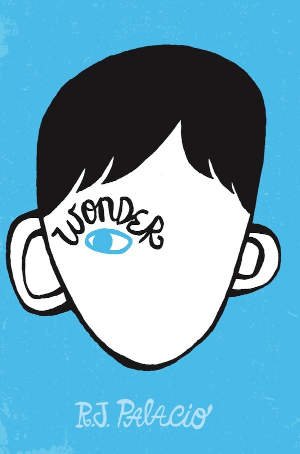
What I Love about R.J. Palacio’s “Wonder”

wonder_cover_art

Penguin Random House Books

I finished reading Wonder in March, but I can’t stop thinking about this book. I’ve recommended it to more people than I can keep track of. The ones who’ve read it get back to me and thank me for recommending it. The book is just that good. This book resonated with me for several reasons. First, I grew up in a family with a sister who had special needs. I also have a son with special needs. I’m a pediatric nurse who’s cared for children with the same kind of anomalies that the main character was born with. Finally, I taught elementary school for 4 years and high school for 1, and Ms. Palacio nails school dynamics beautifully.

If you haven’t read this wonderful book yet, here is a brief introduction: August Pullman has never been able to attend school due to his extensive medical needs. He was born with severe craniofacial anomalies, and has had many surgeries. At the opening of the story, his parents have decided to enroll him in a private school. Auggie is nervous about how the other kids are going to respond to him. The principal picks three kids that he thinks will help ease the transition for Auggie, but it doesn’t work out so well. (It’s more complicated than that, but I don’t want to give spoilers!) However, there is another student named Summer who befriends Auggie without prompting from anyone. Through the narrative, the reader becomes a part of the Pullman family as well as their extended family and friends.

  1. The story unfolds through multiple perspectives. Even though Auggie is an extremely observant kid, there is no way he could know the motivations and back story for every other character in the book. Palacio beautifully puts us inside the head of each character, and this is one of the reasons this book has such a huge heart. No one is a cliché, but a fully developed character with motivations guiding their behaviors.
  2. The book is written with humor. Even though I cried in many places, this book is not in the least bit depressing. The Pullman family relies on humor to get them through the tough times. I came to love this family so much. They made mistakes and they didn’t always agree. But they loved each other and it comes across so beautifully in the writing.
  3. The beautiful writing itself makes the book a pleasure to read. In the very beginning of the book, Auggie tells us, “the only reason I’m not ordinary is that no one else sees me that way.” He is perceptive and notices the way others react to him. He also shares at one point that if he had a magic lamp, he’d wish for an ordinary face. Being inside of Auggie’s head doesn’t feel like a pity party. But the frustration he feels that even his own family doesn’t seem to be able to allow him to be “normal” comes across beautifully. It’s gut wrenching, but at the same time it’s hopeful.
  4. Via’s experiences were the ones that resonated the strongest for me because this teenage character is able to put her family’s existence into words better than I’ve ever been able to. When it’s Via’s turn to tell the story, she compares her family to a solar system. “August is the Sun. Me and Mom and Dad are planets orbiting the Sun. The rest of our family and friends are asteroids and comets floating around the planets orbiting the Sun.” Wow.
  5. Another beautiful part of Wonder that was especially meaningful for me was the relationship between Via and her grandmother. In her early years, having her grandmother’s unconditional love and adoration helped to offset the dynamics of her nuclear family. My grandmother was exactly this for me. And just like Via, she died unexpectedly when I needed her support the most. Via’s grandmother shares a secret with her about why she feels the way she does. “I love Auggie very, very much,…but he has many angels looking out for him already, Via. And I want you to know that you have me looking out for you.”
  6. This book is “real” in every since. Palacio doesn’t sugar coat anything. She allows Auggie to be resentful of “normal” kids at times. Via feels betrayed by her mom at times when she focuses so much attention on Auggie and his needs. The parents have arguments. Some kids are just plain mean, because let’s be honest, some kids just are. Perhaps the best part of the authenticity of Wonder is that is shows how acts of kindness that might seem small at the time, can have an enormous impact on someone who needed the kindness. In fact, this book started the Choose Kind movement through American schools.

To say that I recommend this book is an understatement. If you haven’t read it, you can go here for more information from the book’s publisher. If you have read it, please share your comments. I’d love to hear from you.


Powered by WordPress & Theme by Anders Norén